The Real Reason Some Eyebrow Tattoos Turn Red
If you have worked in permanent makeup for a while, you have probably seen older eyebrow tattoos that have faded to red, pink, or even a warm salmon shade. A colour shift like this does not necessarily point to poor technique. Pigments and techniques have changed considerably, along with our understanding of how colour ages in the skin. Knowing why these shifts happen can help you assess old work more accurately and decide whether correction is the right next step.
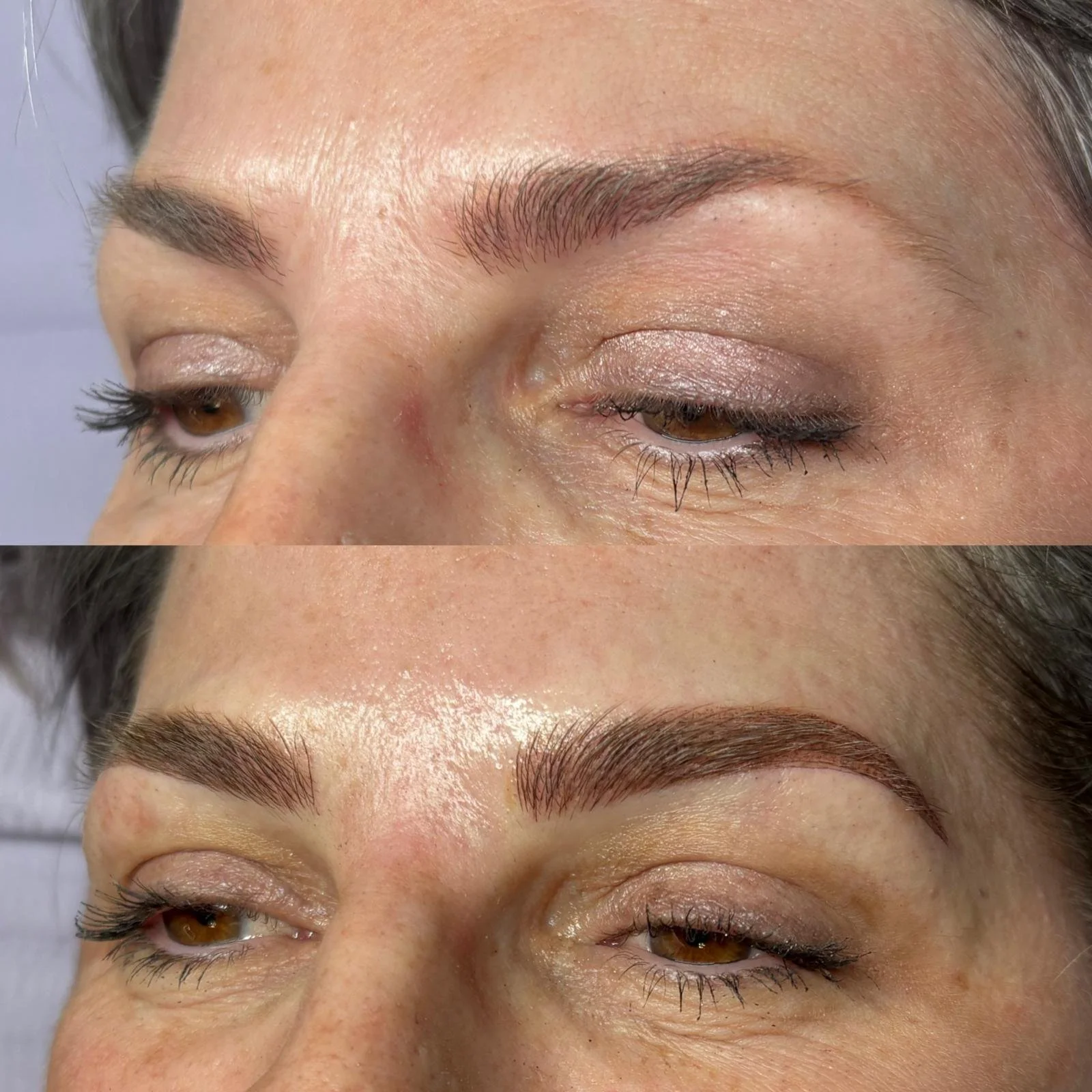
Before-and-after close-up of faded red eyebrow tattoos corrected with brown permanent makeup.
Why Do Eyebrow Tattoos Turn Red?
Many older permanent makeup pigments were made primarily with iron oxides. Brow colours were created by blending several components to achieve a particular shade. Over time, those components did not always fade evenly.
When darker or cooler components broke down first, warmer red, pink, or orange tones could become more noticeable. Some carbon-based pigments had the opposite issue and faded toward gray or ashy tones.
Brow tattoo fading can also be influenced by:
The depth and density of implantation
The client’s skin type and undertone
Sun exposure and skincare products
The original colour choice
The age and saturation of the existing work
The way the client’s skin holds and breaks down pigment
Brittany explains more about why these colour shifts happen.
How to Choose the Right Eyebrow Pigment
There is no single brow shade that will heal the same way in every client. Before selecting a pigment, an artist needs to consider the client’s skin, undertone, natural brow hair, previous permanent makeup, and past healed results.
Technique matters too. Even a well-chosen pigment can age poorly if too much is implanted or it is placed at the wrong depth. Colour theory provides a starting point, but a careful assessment helps you decide how, or whether, to use a particular shade or modifier.
Can Red Brows Be Corrected?
The right approach to brow tattoo correction depends on the colour, shape, saturation of the existing pigment, and condition of the skin. Depending on the case, options may include:
Colour neutralization: A green-based corrector may be used to balance red tones before the desired brow colour is added. The exact modifier depends on the shade of red and the amount of pigment remaining.
Powder or ombré shading: Machine shading can create a softer, more even result once the existing colour has been assessed and, when needed, neutralized. It is generally better suited to brows with enough room in the skin for additional pigment.
Lightening or removal: Dense, dark, or heavily saturated brows may need to be lightened before new pigment is applied. Depending on the old pigment and the client’s skin, professional saline or laser removal may be considered.
Simply placing a darker brown over red brows can create a muddy or overly saturated result. Recognizing when a client needs removal rather than more pigment is an important part of responsible correction work.
Take the Guesswork Out of Brow Corrections
Colour theory can make sense on paper but feel very different when a client sits in your chair with red or heavily saturated brows. Brittany Wallins offers in-person PMU training and one-on-one mentoring. She can teach you how to assess old work, choose modifiers, and recognize when removal may be the better option.
With 10 years of industry experience and more than 20 certifications, Brittany offers practical guidance based on real client work.
Contact Beauty By B to ask about upcoming training or book one-on-one mentoring.
FAQ
-
Warm healed results can be influenced by the pigment formulation, the client’s undertone and skin characteristics, implantation depth, sun exposure, skincare products, or the way different pigment components fade. Reviewing the client’s history and healed results can help you determine whether the colour choice, technique, or another factor may be contributing.
-
Green sits opposite red on the colour wheel, so a green-based modifier is commonly used to neutralize red permanent makeup. The exact shade, such as olive or lime green, depends on whether the healed pigment appears pink, orange-red, or deep red, as well as its saturation. The brows should always be assessed before more pigment is added.
-
Possibly, if the old pigment is light enough and the skin is suitable for correction. Adding brown over heavily saturated red brows can create a darker, muddier result. Removal or lightening may be the better option.
-
Not always. Light, faded pigment may be suitable for neutralization and reshading. Removal or lightening may be recommended when the existing pigment is too dark, dense, saturated, or poorly shaped to correct safely with more pigment.